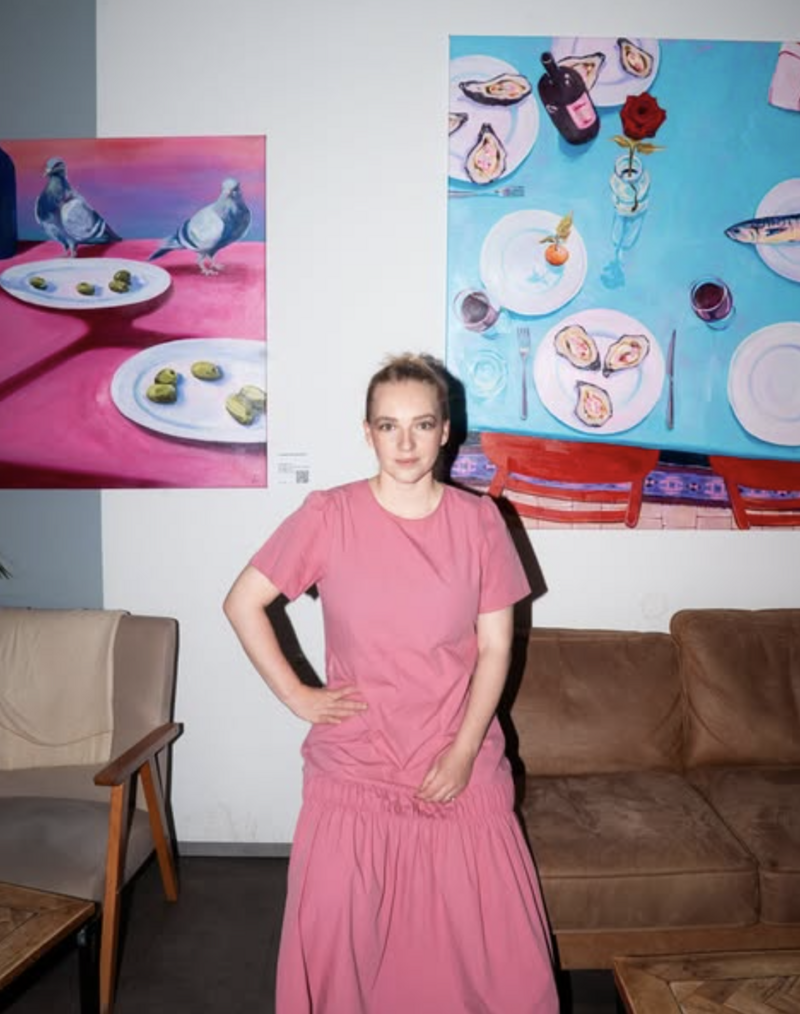
Oudesová Barbora

*1989, Strakonice, Czech Republic
Education:
2014 – 2016 École supérieure d'art et de design d'Orléans, FR
2010 – 2013 University of West Bohemia, Ladislav Sutnar Faculty of Art and Design, CZ
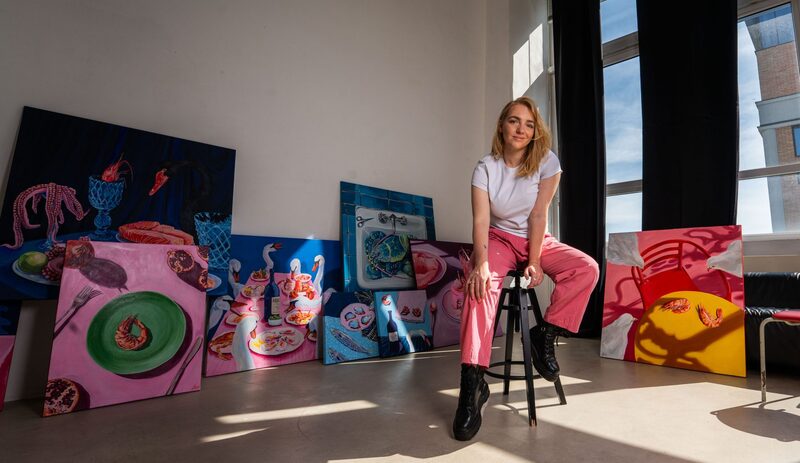
About: Barbora Oudesová is a designer and painter based in Prague. Working in acrylics, she uses food as a metaphor for memory, identity, and life's ceremonies — painting seafood, shared meals, and the rituals around the table that stay with us long after they are gone. Her still lifes are quiet meditations on what we long for, what we value, and what we leave behind.
Selected solo exhibitions:
2026 Version Coffee, Prague, CZ
2025 Víno Hruška, Jablonec nad Nisou, CZ
2025 Cafedu, Prague, CZ
2010 Kavárna U Vavřiny, Písek, CZ
Selected group exhibitions:
2015 Galerie Portyc, Písek, CZ — 5th Group Exhibition of PUB Members
2014 Deggendorf, DE — Young Artists from Písek and Deggendorf
Artist's profile
Barbora Oudesová is a Prague-based designer and painter. She holds a master’s degree in Design from the prestigious French art school ESAD (École Supérieure d’Art et de Design), where she had the opportunity to develop her perception of form, material, and visual aesthetics within an international context. This background in design continues to heavily influence her sense of composition and detail to this day. Following her first exhibition, she stepped away from painting for a period of time before returning to it through a natural creative impulse. This new beginning was sparked by a series of oyster motifs, which soon evolved into richly layered, sophisticated still lifes. Food and the rituals surrounding it have become her primary expressive language.
In her acrylic paintings, she uses food as a powerful metaphor for memory, identity, intimacy, and life’s ceremonies. She often depicts seafood, shared meals, and rituals at the table that remain with us long after the moment itself has passed. Her works stand out for their specific atmosphere; she combines delicate textures, a thoughtful color palette, and a layering process that gives depth to the canvas and draws the viewer into an intimate narrative. The canvases are quiet meditations on what we yearn for, what we value, and what we leave behind. By portraying situations that we often long for rather than actually live, she also offers a subtle critique of contemporary society. In her rendering, the table represents a central space—a microcosm of human relations—where everything can unfold without disruption.