About Personalities in the Studio No. 1: David Mazanec: On Building One's Own World, and Not Just in Kolovraty
Published 2026-03-24

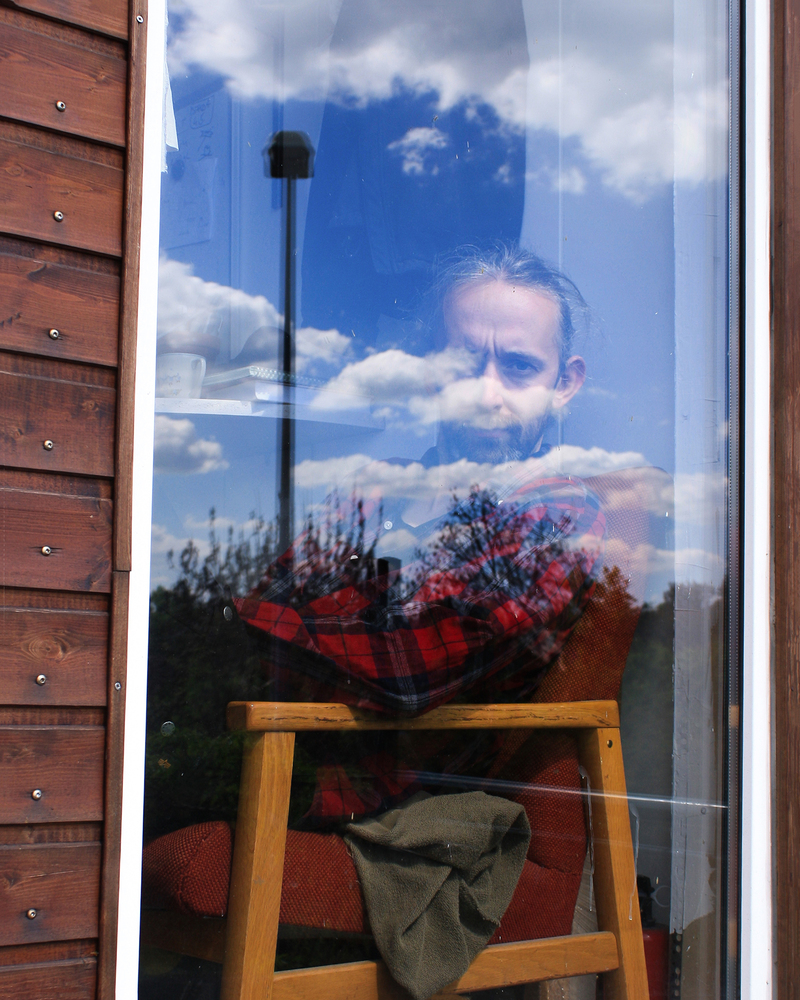
How is art born, and what happens behind the studio doors when the spotlights go out? Jana Laštovka, gallerist and founder of Young Real Art, opens a new series of interviews about life with art. In these intimate probes into the creation and thinking of contemporary authors, we will gradually uncover the stories behind the emergence of exceptional works. We begin our journey in Kolovraty with the painter David Mazanec, who built his own creative space literally with his own hands and seeks a fragile balance between order and chaos in his paintings.
On the "Substrate" and the First Gesture
"David, you mention that the background of your paintings is a kind of 'substrate' – a primal chaos from which everything emerges. How physical is this phase for you? Is it pure instinct and emotion, or do you already seek some future order even in that first action-driven gesture?"
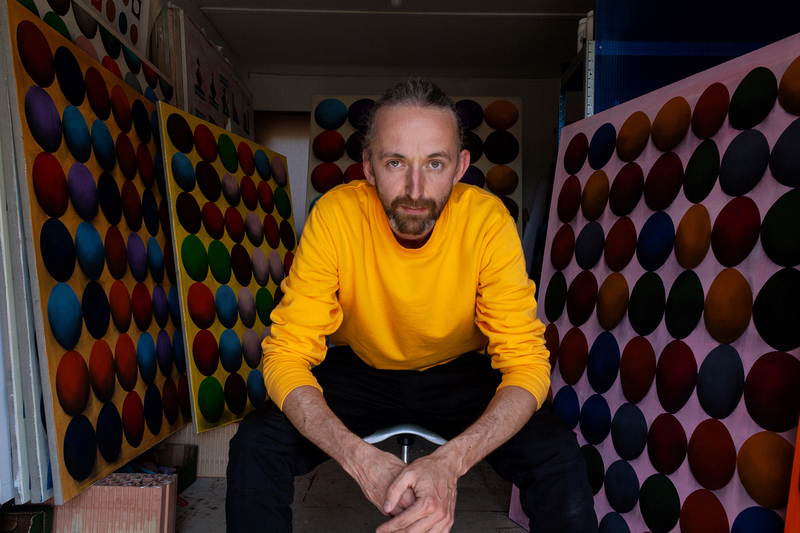
The concept of two pictorial layers, which I began developing at the end of my studies (2013), arose from an effort to connect two polar opposites: to join chaos in the form of abstract expression with order and rules. In a way, it is a search for harmony and balance, where opposites mutually assist each other and create an interesting dynamic.
On His Own Space in Kolovraty
"You built your studio in Kolovraty literally with your own hands. That isn't exactly common these days – most artists tend to seek refuge in abandoned factories or rented spaces. How did this idea come about? Was it a need to have absolute control over the space, much like the control you have over your paintings?"
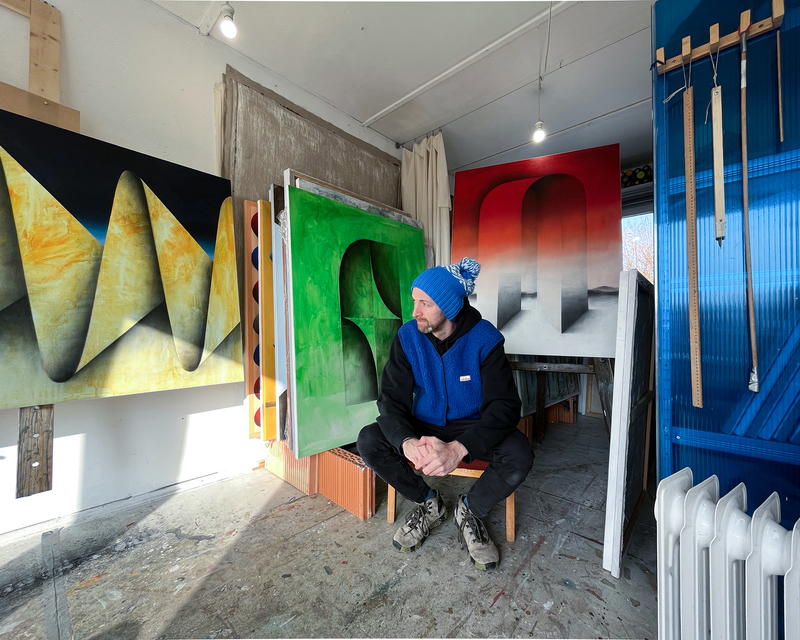
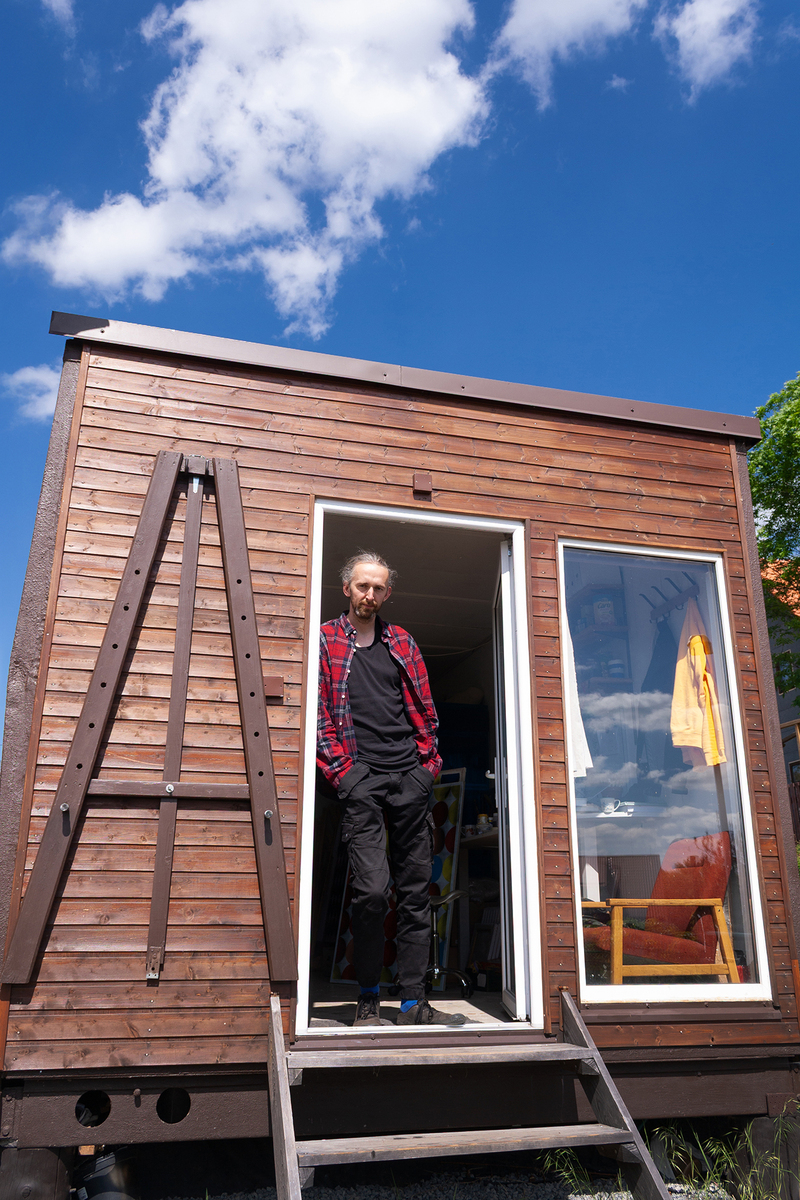
My studio story is such that although I have a nice studio in Železný Brod, where I grew up, it isn't entirely compatible with my family life and daily creative work on the outskirts of Prague. So, a few years ago, I put together a construction cabin, which I have near my home in Kolovraty. I work inside mostly in the winter, and as soon as it gets warmer, I paint outside in the garden or take the canvases out into the field. It should be added that the studio fills up quite quickly, so I am currently flirting with the idea of a showroom.
On the Influence of Place on Creation
"How do you create in this self-built sanctuary? Does the fact that you laid every brick or beam yourself reflect in your painting? Do you feel more 'at home' there, or is it simply a purely functional workshop that allows you to go deeper?"
I built the studio with the knowledge that it is a workspace, and it must remain so. If I were to make it "for beauty," it would look different, but mainly I would probably be too careful about it while painting. This way, I don't look at the state of the building so much and I enjoy the action-oriented possibilities. :-)
On the Moment the System Takes Over
"At a certain point, you decide to 'tame' that wild surface with a grid, dots, or lines. What is the impulse that makes you say enough chaos, it's time to establish a system? Is it a moment of relief for you, or rather a sense of responsibility that you are now giving the world clear rules?"
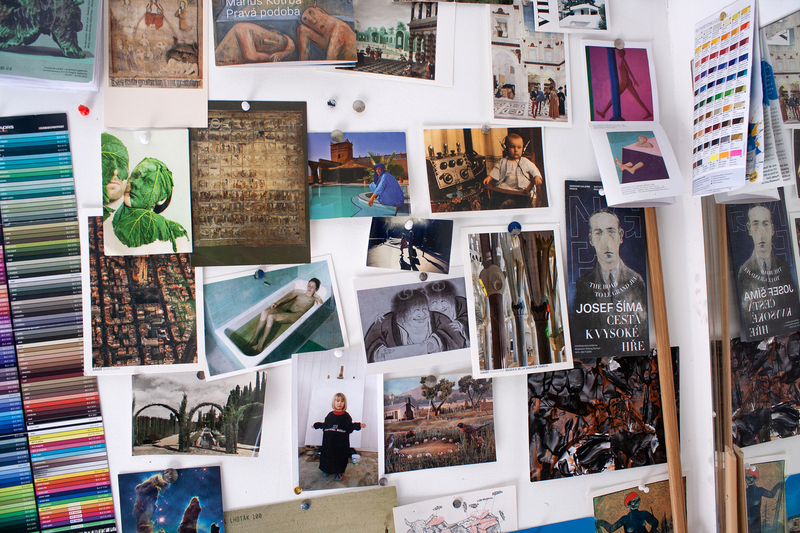
I function the other way around. I am a rational and analytical person; in most cases, I try to "think up" the painting. Before I start, or even during the painting process, I set various rules for myself, which I then try to respect. It may sound paradoxical, but one of those rational rules can be to work non-rationally and create part of the painting without much control, spontaneously or expressively. Another rule, for example, is to be guided by a roll of the dice.
On the Barrier and the Secret
"Your grids and rasters often function as a screen. Why is it important to you that the viewer doesn't see what is behind them completely clearly? Are you afraid that if we saw that 'substrate' without a filter, it would be too exposed or incomprehensible?"
The background itself, or rather the rear plane of the painting, is essentially an abstract layer for me. It could function on its own, it has its qualities, but at the same time, it would still be waiting for something. The front layer brings a more concrete theme into it. So, it's not about a fear of revealing something, but about the fact that only their combination creates a full-fledged painting for me.
On the "Either/Or" Philosophy
"You say that things can be 'this way or that way.' Do you ever struggle at the canvas with your own need to have things under control, or do you intentionally cherish that ambivalence and ambiguity as the main engine of your work?"
I truly embrace ambivalence and ambiguity as my own. For me, it stems from the feeling that things generally do not have one fixed meaning, but change according to the context and the way we look at them. The idea of "this way or that way" is not hesitation for me, but an acceptance that different meanings can exist side by side.
On the Metaforms Series
"In the current Metaforms series, solid shapes bend and mirror each other. Is this your reflection on today's era, in which it seems that even the most solid truths and structures are beginning to bend and change into something else under our hands?"
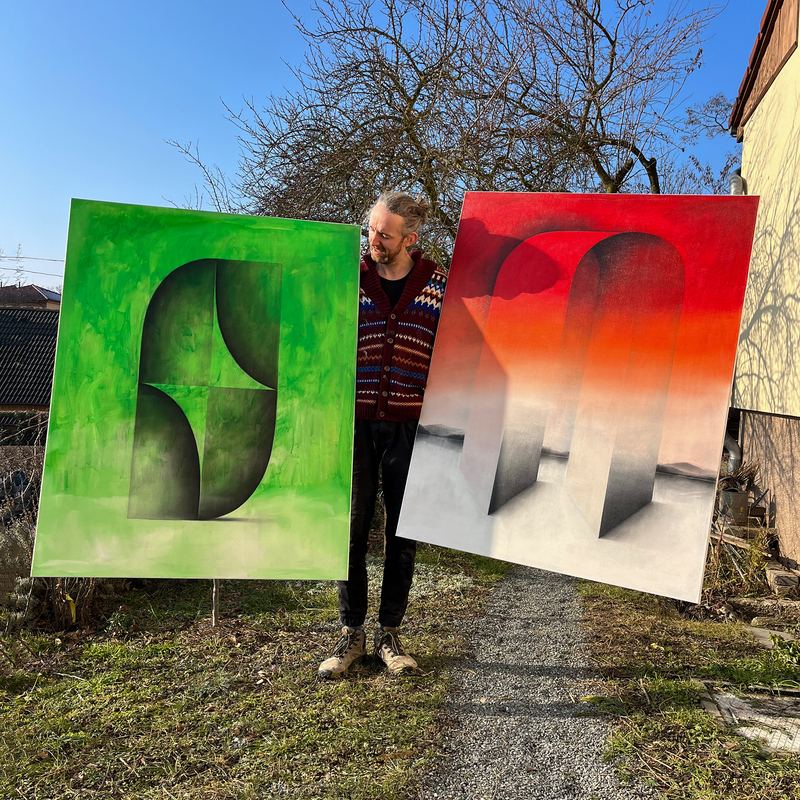
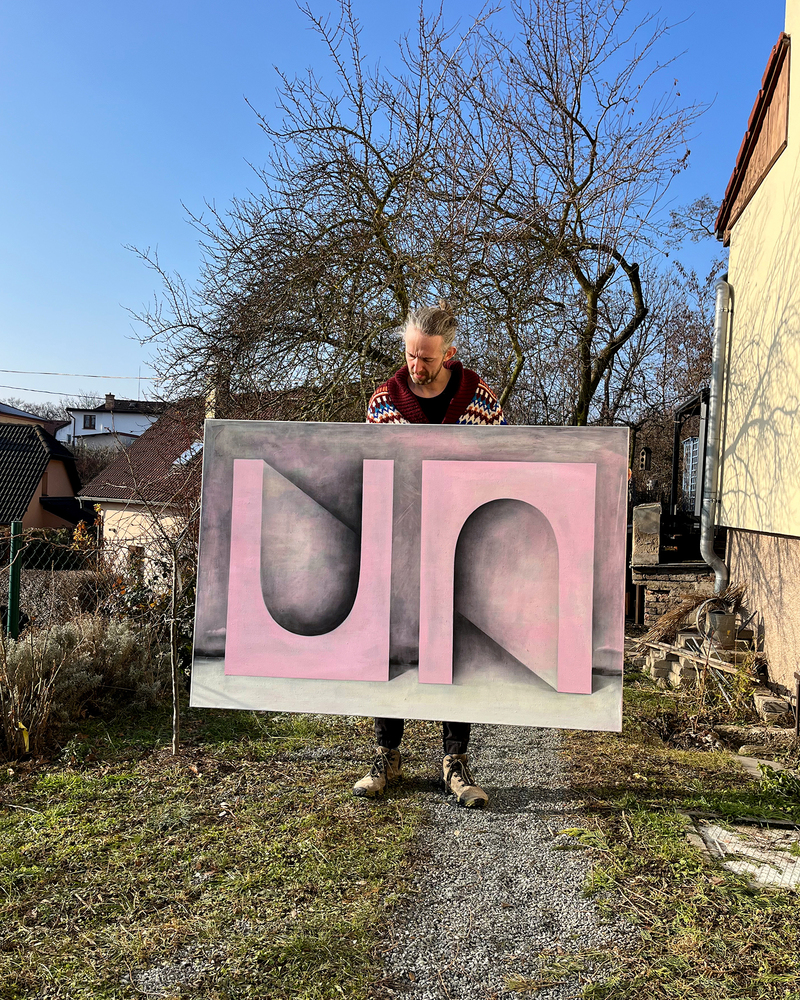
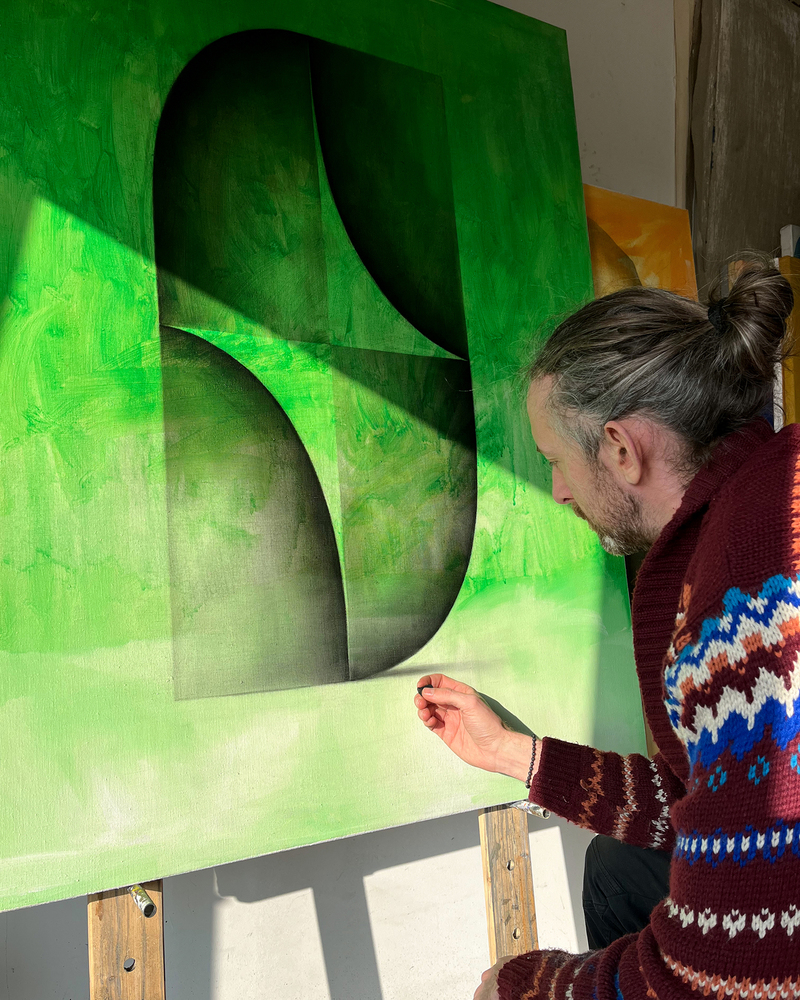
This series is based on simple compositions, a play of shapes, optical illusions, and the universe. Objects transform in various ways, increase in size, and create monumental backdrops for the theater of which we are a part. I am interested here in a world that we don't normally perceive, but according to whose rules we nevertheless function. Some things remain elusive, and that is precisely what is interesting and tempting about them. I don't think everything has to have a clear explanation.
On the Return from Spain
"How much did your year-long stay in Granada influence your work with space and layers? Did the Spanish light bring some new need for brightening to your 'Ostrava' school of painting, or on the contrary, a desire for even more layering of darkness?"
I would describe my stay in Spain as a pivotal moment in my life; therefore, I consider it current in its own way even after nearly fifteen years. Another life essence was created for me there, which I occasionally follow up on. I like to remember that year sometimes.
On the Finished Painting as a Retrospective
"You claim that the moment a painting is finished, it is already a retrospective view. Does that mean that at that moment you change from a creator into a mere observer who tries to understand in hindsight what actually happened on the canvas?"
I wouldn't say "mere observer"—the authorial relationship does not disappear. I am the only one who knows and has experienced the entire creation of the work. After completion, however, my position changes; I no longer actively intervene in it and become more of its curator. In hindsight, it always becomes clear what actually worked, what didn't, and what the original ideas were compared to the result. Finishing a painting is usually accompanied by an internal tension to push the painting further and, at the same time, not to "overwork" it and manage to close it. Once that succeeds, the painting becomes independent and can go, so to speak, "out into the world."