About Personalities in the Studio No. 2: Jan Heres: On Light, Demons, and Following the White Rabbit
Published 2026-05-01

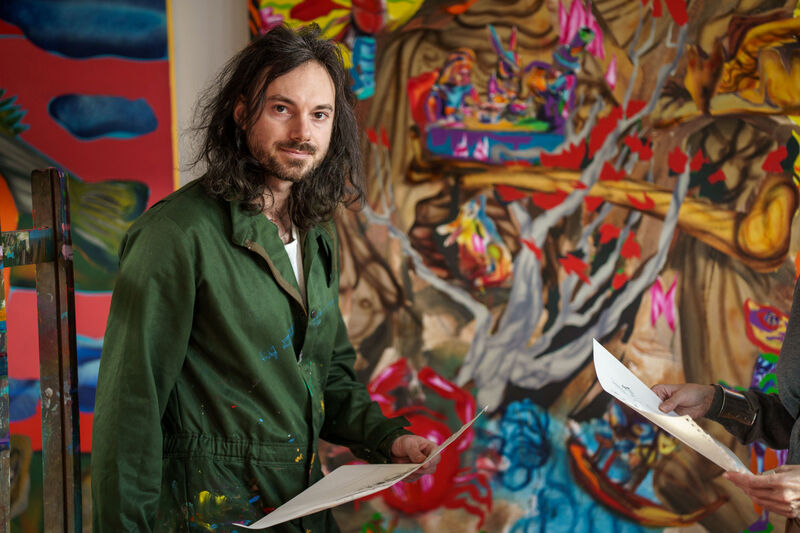
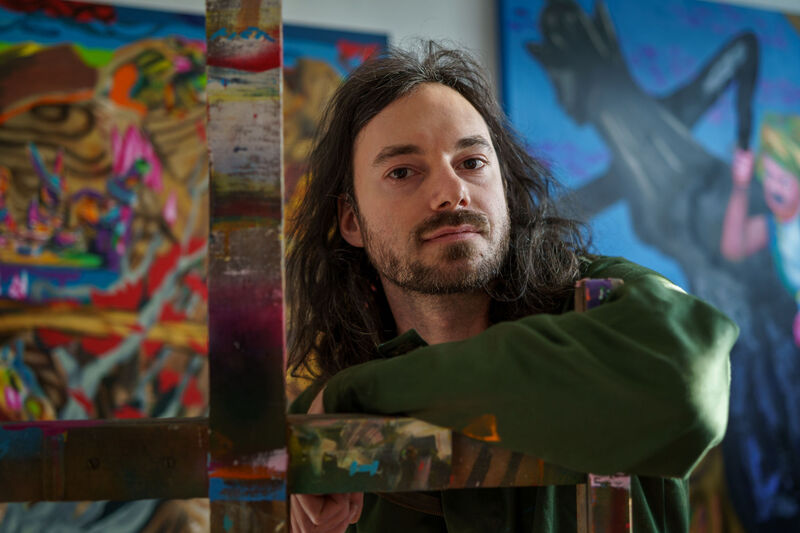
The series of intimate probes into the private worlds of Czech artists continues. This time, Jana Laštovka takes us into Jan Heres' new studio. Along with Filip Švehla, Honza was one of the very first artists Jana approached during his studies at the Academy of Fine Arts (AVU), and she has been following his journey closely ever since. He remains a pivotal figure for Young Real Art and its upcoming projects—not because he was the first, but because of who he has become over the years. His path has led him through residencies in Indonesia, Valencia, Miami, and Taipei. In the meantime, he lost his studio at the Libeň train station, which developers razed to the ground. Now, he has a new space in Spořilov—bright, quiet, and about fifty square meters. That is where we met.
On Light
Honza, you were born in Switzerland, grew up in Prague, spent a year in Indonesia, a year in Valencia with a friend, your girlfriend is from the Krkonoše mountains, and you were recently in Taipei. That is a rather diverse collection of "lights." Which of them has found its way into your paintings the most—or do they all somehow intertwine?
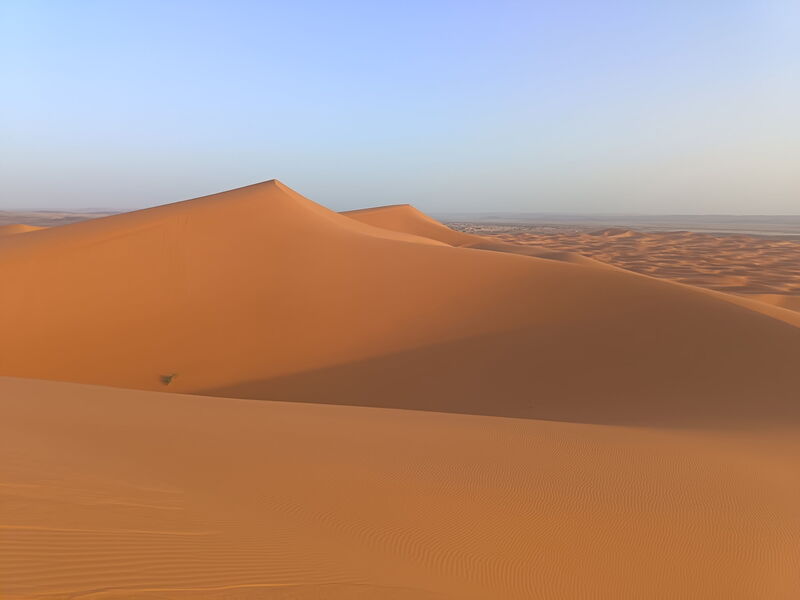
When I stay somewhere for a long time, it always reflects in the paintings—not just through the subject matter, but through the light and the overall atmosphere. Last year, I was in Morocco and visited the Erg Chebbi dunes. It was an experience similar to seeing the sea for the first time. I still remember that bright yellow color. When I returned, I was working on the Alice cycle. For example, in the paintings Sleeping Gryphon or The Letter, I used the desert as the setting.
On Indonesia
A year at the Indonesian Institute of the Arts in Yogyakarta is not exactly a standard choice for a Czech AVU student. What brought you there—and what did you learn there that Prague couldn't have taught you?
I remember I didn't particularly prepare for it beforehand because my friends and I were having an exhibition at the Žižkov Freight Station, where we were exhibiting three-meter formats in an industrial space. Many people came, and there was even a report on TV. I flew out the very next day after the opening. Up to that point, it was probably my most powerful travel experience. In the end, I extended my stay and stayed for another semester—about nine months in total. When I later left for Singapore, I started missing Yogyakarta dearly; I truly fell in love with the place. I used to ride several hours on a scooter from the city into the jungle around the Merapi volcano with a canvas. Those were intense experiences. I had a studio in the student housing right next to the school, surrounded by rice fields. I started painting Javanese masks and various deities; I was very fascinated by the wayang stylization. I think that was the first time I stopped being interested in reality in my paintings and began searching for a new visuality.
On Valencia
A year in Valencia with your best friend—that sounds more like an adventure than a study stay. Was it? And what did it give you as a painter?
I think it was interesting that we had both just graduated and felt a certain urge to define ourselves more, to find our own creative approach. Filip abandoned figuration and went down the path of abstraction, while I moved away from photography and working with models and reality. I focused on stylization and started experimenting with sprays and oil sticks, connecting different techniques more deeply. I also made collages and paper sculptures. We lived in Cabanyal, an old neighborhood by the sea. I found my first inspiration on the street, where many Roma people lived. I painted boys playing football; later, I moved closer to the beach and painted seaside motifs. Something in the style of Sorrentino’s The Great Beauty—parties, ostentatious beauty and emptiness, people taking photos on the beach and bathing by the shore. I created a huge number of works on paper as well as large formats made from several sheets. At the end of the stay, I started painting on canvas. A friend came to visit us and told me that my paintings captured exactly how he imagined Valencia, which made me happy. All the paintings had a specific color palette and the atmosphere of that place. That was precisely the case where a location imprints itself onto the work.
On Taipei
You were recently on a residency in Taipei—and your website immediately featured paintings from there: arhats, Buddhist iconography. Did you go there with your own theme, or did the place reorient you on its own?
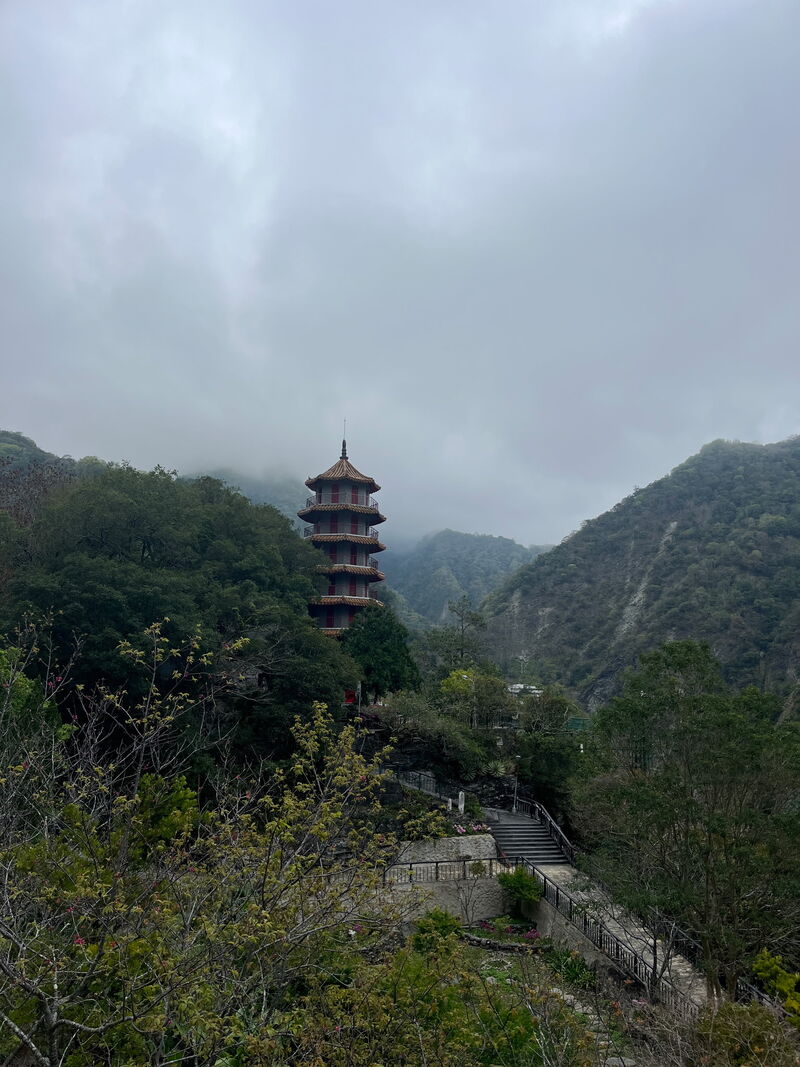
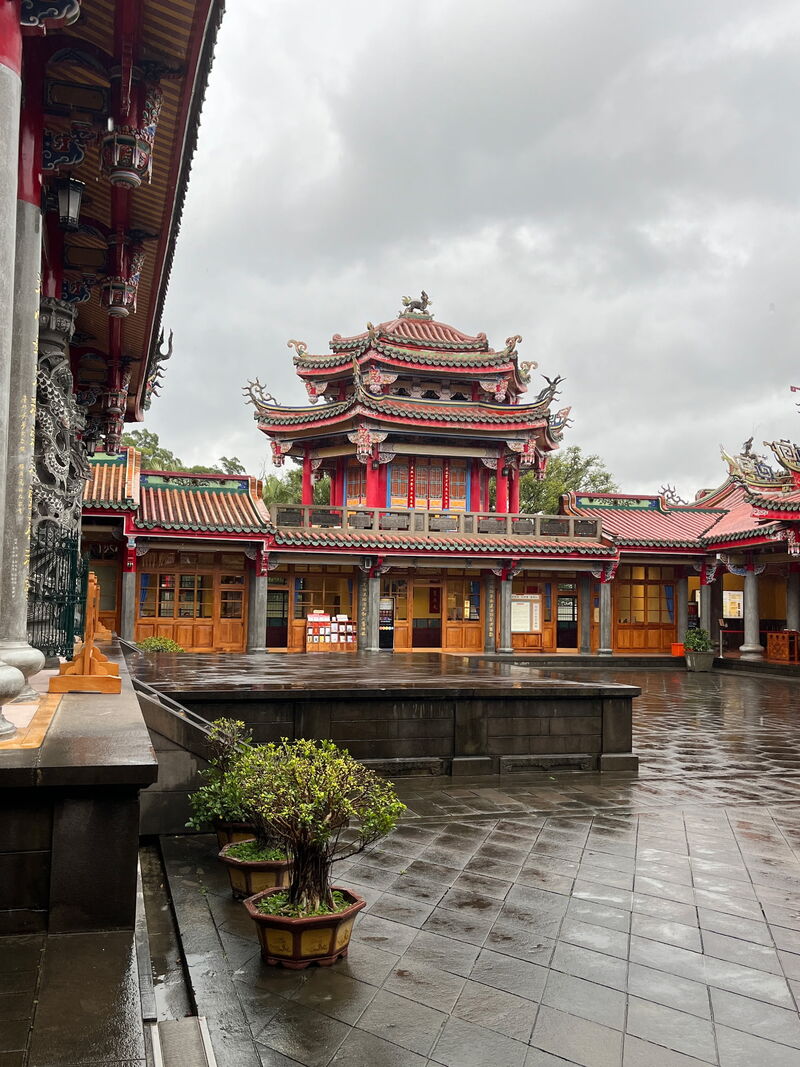
I had no idea what I was going to paint there. In the beginning, I drew all sorts of things. I made sketches of the surroundings, but there was a strong Japanese influence, so I also drew posters inspired by anime and the like. My most powerful experience was visiting a temple. The temples are colorful, filled with various deities and mystical scenes. There was also a huge sleeping Buddha and a garden full of arhats. One room was dedicated to the afterlife, where demons punished deceased souls. I made a vast number of sketches and began imagining a new series. I visited many temples and saw large wooden reliefs of naval battles and other motifs. One idea was to paint them using new techniques and turn them into modern paintings. After returning, I had a large solo exhibition in Ostrava at the Hans Ulrich Villa. I took advantage of that and created a series of large and medium-sized paintings. Some were even morbid, inspired by the punishments in the afterlife. Another motif was the Goddess Mazu fighting a dragon, or mythical beings. At the entrance to the gallery, there were two "Protectors of Buddha," who stand at temple entrances to protect the site from negative energy. I used them in my installation in the same way—to protect the gallery visitors.
On Animals and Mythology
In your paintings, there are beings on the border between the real and the mythical—wolves, Kirin, tigers. Are they symbols, or is it just easier for you to paint them than people?
I find people the easiest to paint. It makes the most sense to me to paint the human figure. It was depicted differently in ancient Egypt than in the Renaissance or modernism. I still paint it, but in a different way than my predecessors. I use various airbrushes and sprays and combine them with expressive brushstrokes, searching for a contemporary visual language. The hardest part is creating a visual that no one has ever done before, and that is what I strive for. Occasionally, though, I need a break from figures; then I like to paint an animal, a mythological creature, or a landscape. Kirins or guardian lions are very positive patrons, yet they look terrifying. It is interesting that some cultures have a different aesthetic framework. Perhaps our society tries to push out a certain "anti-beauty," yet it carries great energy. East Asia has always attracted me with its expressive and urgent visuality. It's similar with colors—here, we prefer beige, muted, monochromatic tones; sometimes it's called the "crisis of modernity." This aesthetic is not close to me; I find intense colors to be alive.
On the Alice Series
The Alice in Wonderland series has a clear literary source—a world full of absurdity and inverted rules. Do you feel at home in that absurdity, or is it more about a visual game with space and reflection?
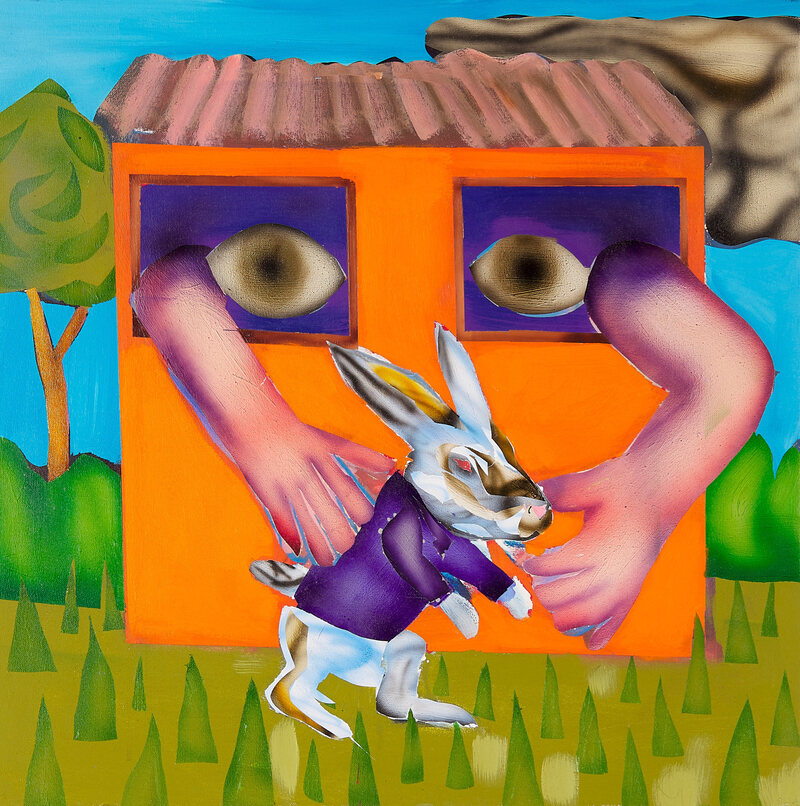
I like the symbolism of the White Rabbit and the rabbit hole. When you follow the White Rabbit down the hole, you can discover a new experience. It reminds me of the creative process. People always see the finished paintings, but first, those paintings have to be painted. Alice falls asleep and in her dream, she thinks she sees a rabbit, which she then follows. I wanted to depict a dream. Some paintings are more specific and based directly on the literary work; others are more about free association. I perceive the mirror perspective as absurdity, a lack of logic. We live in a world of rules; we have to be careful about how we act and how we dress. In paintings, I can do things I couldn't do in everyday life. This work was a critique of Victorian society and is still relevant in many ways.
On Figuration
In recent years, you have been painting many figures—women, poses, gestures. Is this a reaction to previous landscape and mythological cycles, or has the body always interested you and just surfaced more recently?
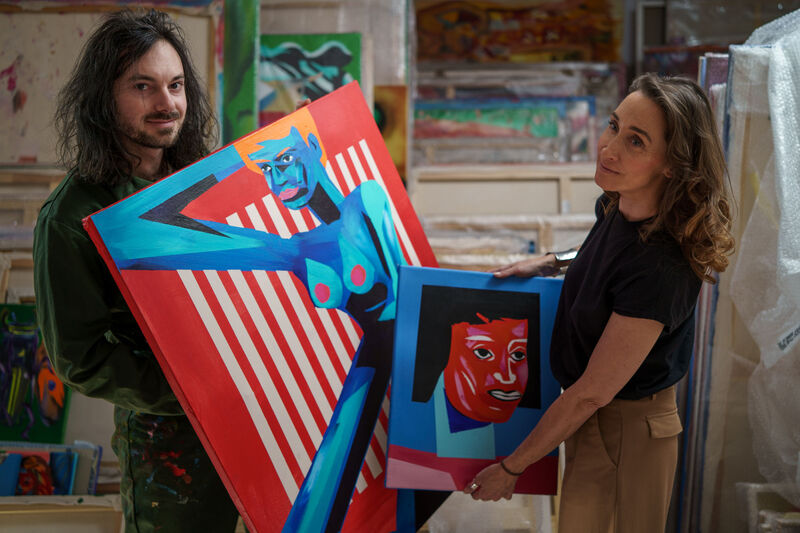
The figuration I have been painting for the last few years has two main currents for me. The first is the psychology between characters; pairs, couples, or hugging figures often appear in the paintings, where closeness and intimacy are emphasized. The second level is more about physicality. The paintings are often erotic and depict nudity. However, I have always painted figures, whether it was the psychology of a family environment, my friends, pub and tram motifs, beach scenes, mythology, or now, Alice.
On Miami and the International Context
Byl jsi na rezidenci v Miami, vystavoval jsi s Filipem Švehlou v THINK+feel Contemporary. Jak se na tvou práci díváš z té mezinárodní perspektivy — funguje česká malba ve světě, nebo se musí něčím přizůsobit?
I think Czech painting has world-class quality. I don't think we lag behind at all. One teacher used to say that a person can paint the best possible picture in the Czech Republic, but there are only 10 million of us. One has to "fight their way" abroad. I have already had large solo exhibitions in the Czech Republic, for example, at the Hans Ulrich Villa, The Chemistry Gallery, Via Art, and the Felix Jenewein Gallery. In the future, I would like to focus on the international scene.
On Losing the Studio and a New Beginning
You were all forced out of the Libeň station, where you had your studio, by developers. Now you've been in Spořilov for a few months. How important is the space for you—has it translated into the paintings?
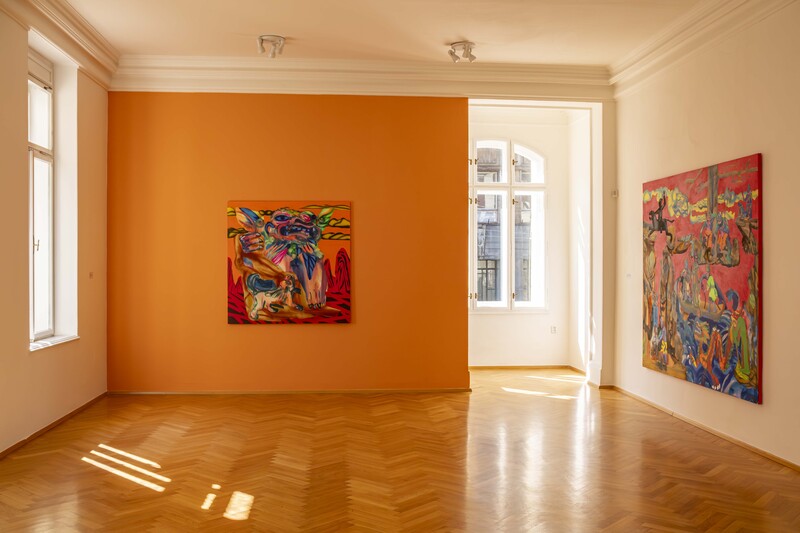
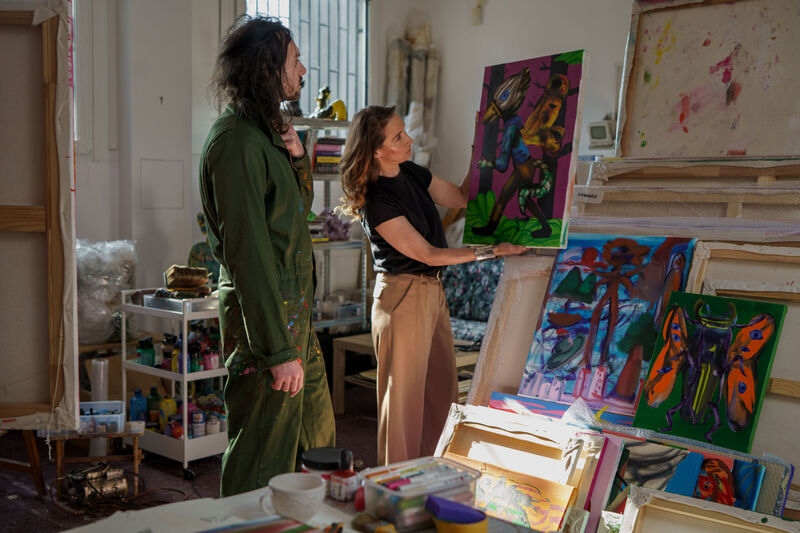
I like change. Most importantly, I’ve organized my things. I signed and archived all the paintings. I threw away old paints and empty cans. I try to clean up every day after I finish painting to keep the studio tidy. That’s a new thing for me now, and the reward is a clean environment to work in every day. I didn't manage that in the old studio, where I also worked on plaster sculptures; it looked more like something out of photos of Francis Bacon’s studio, haha. There is also pleasant light in this studio; I haven't been here long, but I work very well here.
On Young Real Art
Along with Filip Švehla, you were the first person I approached for Young Real Art—back when you were still studying at AVU. How has the way we talk about your work changed over the years?
I send the gallery paintings that I am convinced are of high quality. Since my student days, however, my approach to materials has also transformed. In school, I would easily turn a failed painting around and stretch it from the other side, so it essentially had a front and a back. Today, I discard such pieces and work with new canvas. I use high-quality, solid frames and work with the highest quality paints available from the "expert" range. In this regard, my approach has become significantly more professional. A big advantage is that we have known each other for a long time, so our relationship is friendly and open. At the same time, I perceive a professional approach from the gallery, both in communication and in facilitating sales to collectors. This allows me to focus on my own work, which suits me perfectly.
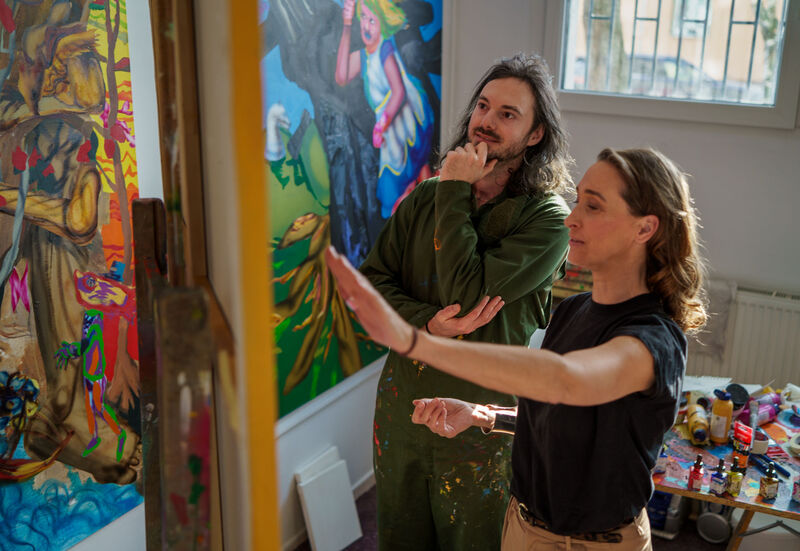
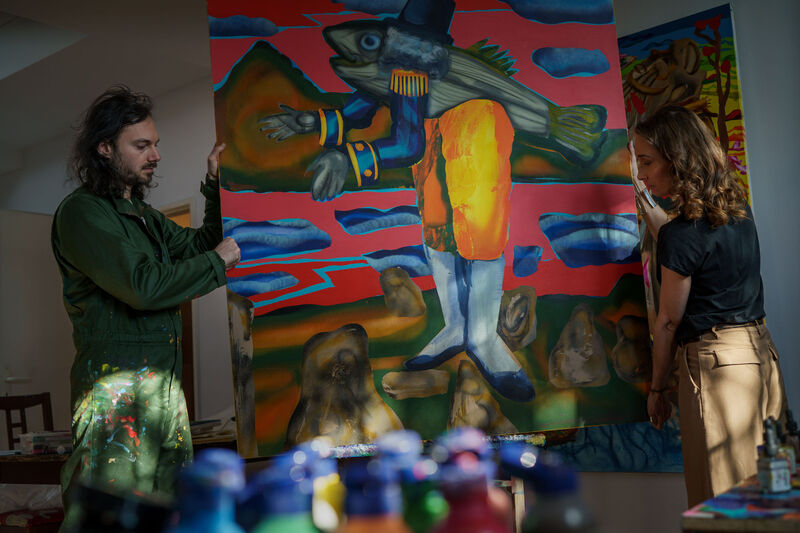
Photo: Roman Valent for Young Real Art + Author's archive from his travels


.jpg)